
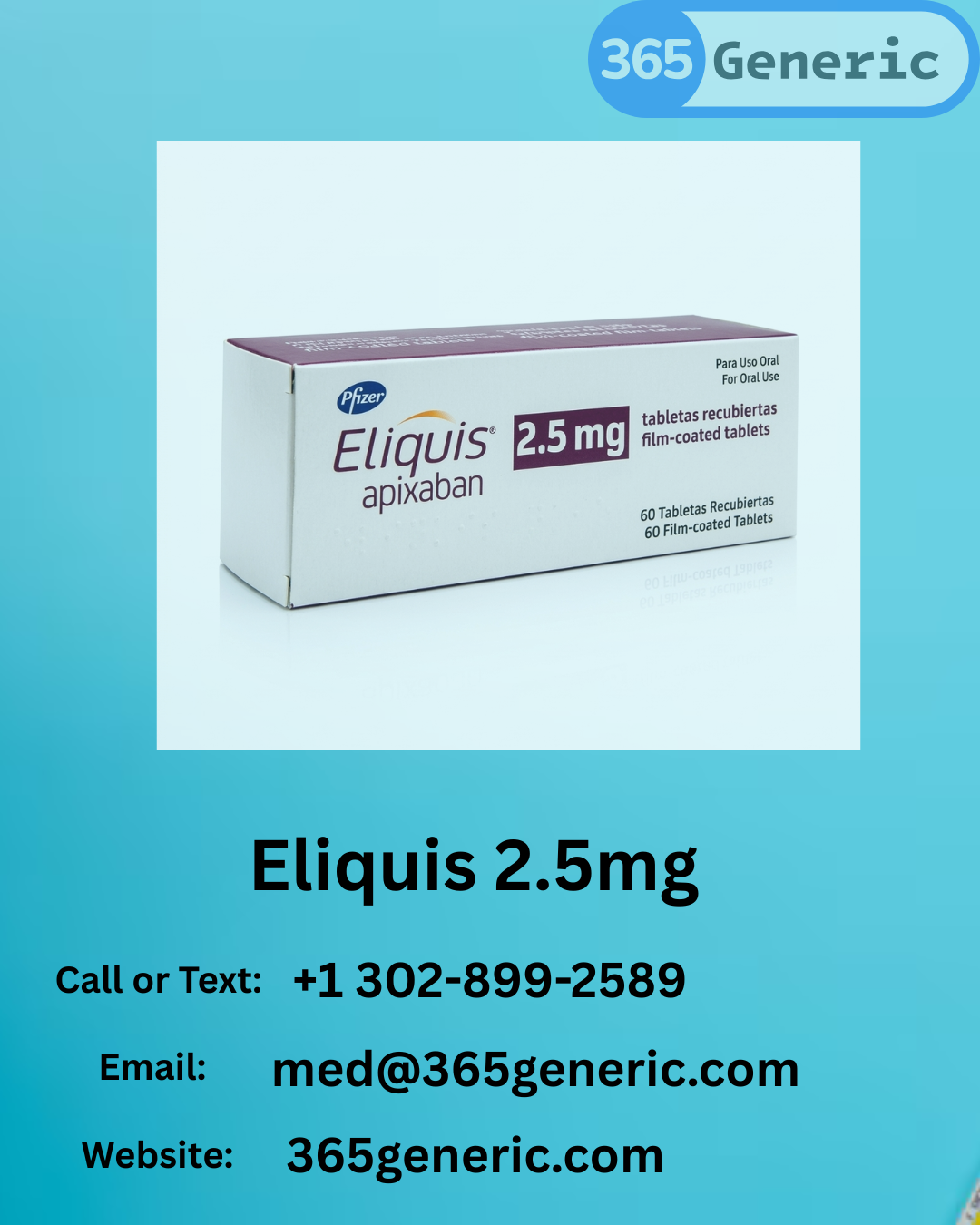
Eliquis 2.5 mg (Apixaban): Complete Patient Information Guide
Eliquis 2.5 mg is a prescription medication containing apixaban, an anticoagulant (blood thinner) used to help prevent and treat certain types of blood clots. It belongs to a class of medicines known as direct oral anticoagulants (DOACs).
Blood clots can form when blood becomes too likely to clot. While clotting is important for preventing excessive bleeding, abnormal blood clots may block blood vessels and increase the risk of serious health complications. Eliquis works by helping reduce the formation of harmful blood clots.
This guide provides general information about Eliquis 2.5 mg, including its uses, how it works, dosage considerations, possible side effects, precautions, and safe medication practices.
What Is Eliquis 2.5 mg?
Eliquis 2.5 mg contains apixaban, a factor Xa inhibitor. It works by blocking a specific protein involved in the blood clotting process called Factor Xa.
By reducing Factor Xa activity, Eliquis helps decrease the ability of blood to form unwanted clots while maintaining normal circulation.
Eliquis should only be used under the guidance of a qualified healthcare professional.
Uses of Eliquis 2.5 mg
Eliquis 2.5 mg may be prescribed for several conditions involving blood clot prevention.
Prevention of Stroke in Atrial Fibrillation
People with certain types of irregular heartbeat, such as non-valvular atrial fibrillation, may have an increased risk of blood clots forming in the heart. Eliquis may be prescribed to help reduce the risk of stroke caused by these clots.
Prevention of Blood Clots After Surgery
Eliquis may be used after certain hip or knee replacement surgeries to help reduce the risk of deep vein thrombosis (DVT) and pulmonary embolism (PE).
Treatment and Prevention of Certain Blood Clots
In some cases, Eliquis may be prescribed as part of treatment plans for conditions involving blood clots in veins.
The appropriate use depends on individual health factors and should be determined by a healthcare provider.
How Does Eliquis Work?
Eliquis works by blocking Factor Xa, an enzyme involved in the production of thrombin.
Thrombin plays an important role in clot formation. By reducing Factor Xa activity, Eliquis helps slow the clotting process and lowers the chance of harmful clot formation.
Eliquis 2.5 mg Dosage Information
The correct dose of Eliquis depends on:
- The medical condition being treated
- Age and weight
- Kidney function
- Other medications being used
- Overall health history
- Eliquis 2.5 mg may be prescribed in specific situations where a lower dose is appropriate.
- Always take Eliquis exactly as prescribed by your healthcare provider.
- Do not change your dose or stop taking Eliquis without medical advice, as stopping suddenly may increase the risk of blood clots.
How to Take Eliquis Safely
General safety recommendations include:
- Take Eliquis exactly as directed.
- Try to take doses at the same time each day.
- Do not skip doses unless advised by your healthcare provider.
- Inform doctors and dentists that you take Eliquis before procedures.
- Keep a complete list of your medications.
- Attend regular medical appointments.
Possible Side Effects of Eliquis 2.5 mg
Like all medications, Eliquis may cause side effects.
Common side effects may include:
- Easy bruising
- Minor bleeding
- Nosebleeds
- Bleeding gums
- Longer bleeding time after cuts
Because Eliquis affects blood clotting, bleeding-related effects are among the most important concerns.
Serious Side Effects and Warning Signs
Seek medical attention if you experience signs of serious bleeding, such as:
- Unusual or heavy bleeding
- Blood in urine
- Black or bloody stools
- Vomiting blood
- Severe headache
- Unexplained weakness or dizziness
- Bleeding that does not stop
Any unusual bleeding should be discussed with a healthcare professional.
Precautions Before Taking Eliquis
Before starting Eliquis, inform your healthcare provider if you have:
- A history of bleeding problems
- Liver disease
- Kidney problems
- Recent surgery or planned surgery
- A history of stomach ulcers
- Allergies to medications
- Any other medical conditions
Your healthcare provider will evaluate whether Eliquis is suitable for you.
Eliquis Drug Interactions
Eliquis may interact with certain medications, including:
- Other blood thinners
- Certain pain relievers
- Some antifungal medications
- Certain antibiotics
- Some medications affecting liver enzymes
Always inform your healthcare provider about all prescription medicines, over-the-counter products, vitamins, and supplements you use.
Lifestyle and Safety Tips While Taking Eliquis
Patients taking Eliquis should consider:
- Avoiding activities that increase injury risk
- Using caution with sharp objects
- Reporting unusual bleeding
- Maintaining regular healthcare visits
- Following prescribed treatment plans
Do not stop Eliquis without discussing it with your healthcare provider.
Frequently Asked Questions About Eliquis 2.5 mg
What is Eliquis 2.5 mg used for?
Eliquis 2.5 mg is an anticoagulant medication used to help prevent and treat certain blood clot-related conditions.
Is Eliquis a blood thinner?
Yes. Eliquis is commonly called a blood thinner because it reduces the ability of blood to form harmful clots.
Can I stop taking Eliquis suddenly?
Do not stop Eliquis without medical advice. Stopping suddenly may increase the risk of developing blood clots.
What should I do if I miss a dose?
Follow your healthcare provider's instructions for missed doses. Do not take extra doses unless advised.
Does Eliquis increase bleeding risk?
Yes. Because Eliquis affects clotting, it may increase the risk of bleeding. Patients should report unusual bleeding symptoms.
Final Thoughts
Eliquis 2.5 mg (apixaban) is an important anticoagulant medication used to reduce the risk of harmful blood clots in certain patients. When used correctly under medical supervision, it can be an effective part of preventing serious clot-related complications.
Understanding how Eliquis works, its possible side effects, and important safety precautions can help patients use this medication responsibly.
Always consult a qualified healthcare professional before starting, changing, or stopping any medication.
Medical Disclaimer
This information is provided for educational purposes only and does not replace professional medical advice, diagnosis, or treatment.